MoRo Analyzer
Modal and Seismic Analysis Software
A research-based computational platform for professors, students, researchers, and practicing engineers in structural and earthquake engineering.
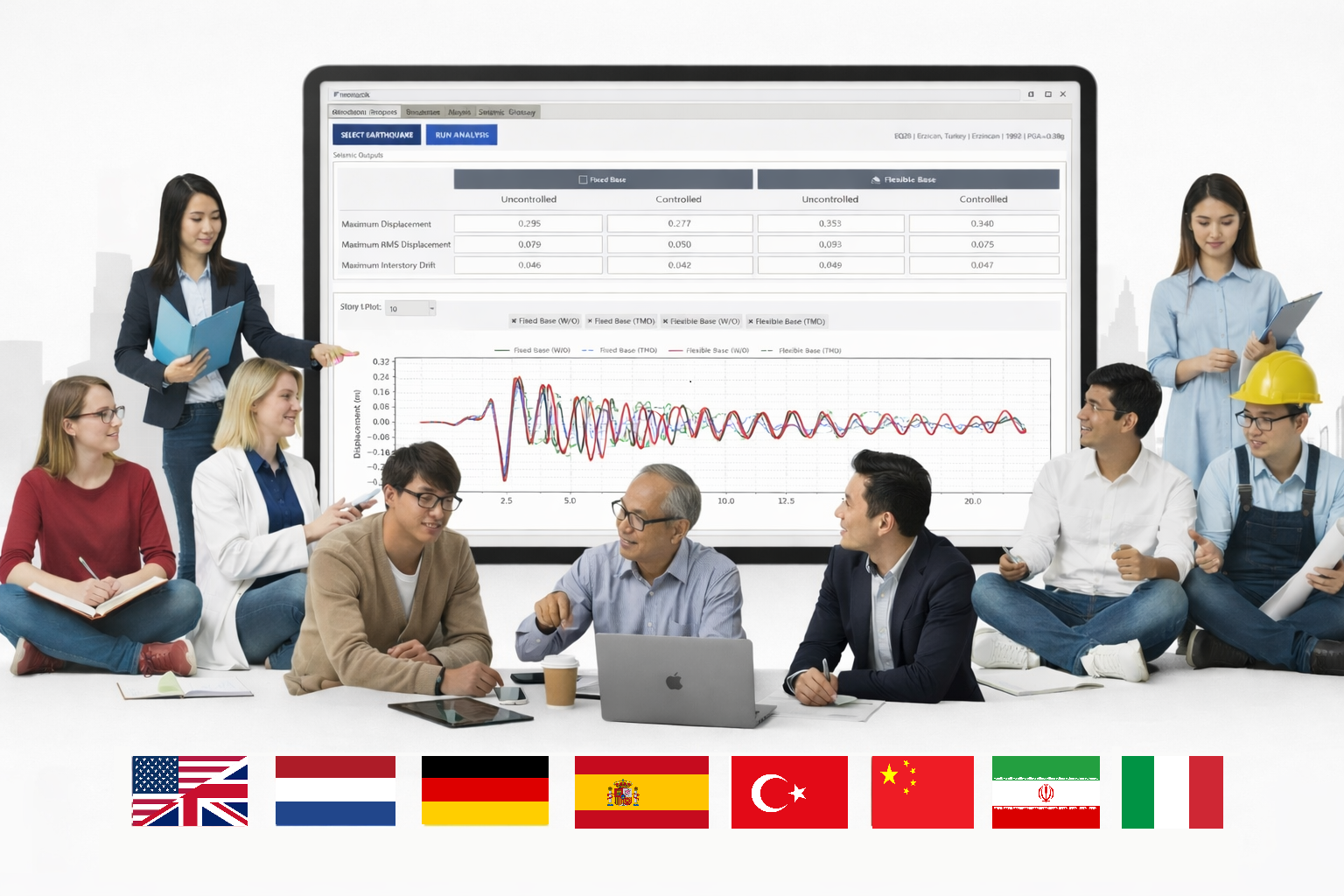
Analysis Workflow
1- Language Selection
Choose the user interface language (English, Turkish, German, Dutch, Italian, Spanish, Chinese, Persian).
2- Building Properties
Define story mass, stiffness, and damping ratio, and—when SSI is included—story height and mass moment of inertia.
3- Soil and Foundation Properties (Optional)
Define soil Poisson’s ratio, shear wave velocity, mass density, and foundation mass and inertia when SSI effects are considered.
4-Control System Definition (Optional)
Define tuned mass damper (TMD) properties, including mass ratio and tuning method.
5- Modal Analysis
Perform modal analysis and visualize natural frequencies and periods for fixed-base and flexible-base configurations, with or without TMDs. Generate a modal analysis report.
6- Seismic Analysis
Select an earthquake record and evaluate seismic response of uncontrolled and TMD-controlled systems under fixed-base or SSI conditions.
MoRo Analyzer Interface


Reports & Glossary
Automatically Generated Analysis Reports
- Automatically generated professional report
- Complete system properties
- Soil–foundation interaction parameters
- TMD properties
- Modal analysis results
- System mass, damping, and stiffness matrices


Glossary and Parameter Definitions
- Building Parameters
- Soil Parameters
- Foundation Parameters
- TMD Properties and Tuning Methods
- Modal Analysis Outputs
- Seismic Analysis Outputs


Research Foundation and Development
MoRo Analyzer was developed by Mostafa Roozbahan, Ph.D., in Civil Engineering at Izmir Institute of Technology (IZTECH) under the supervision of
Prof. Dr. Gürsoy Turan.
The numerical methodologies implemented in MoRo Analyzer are based on peer-reviewed journal publications, including:
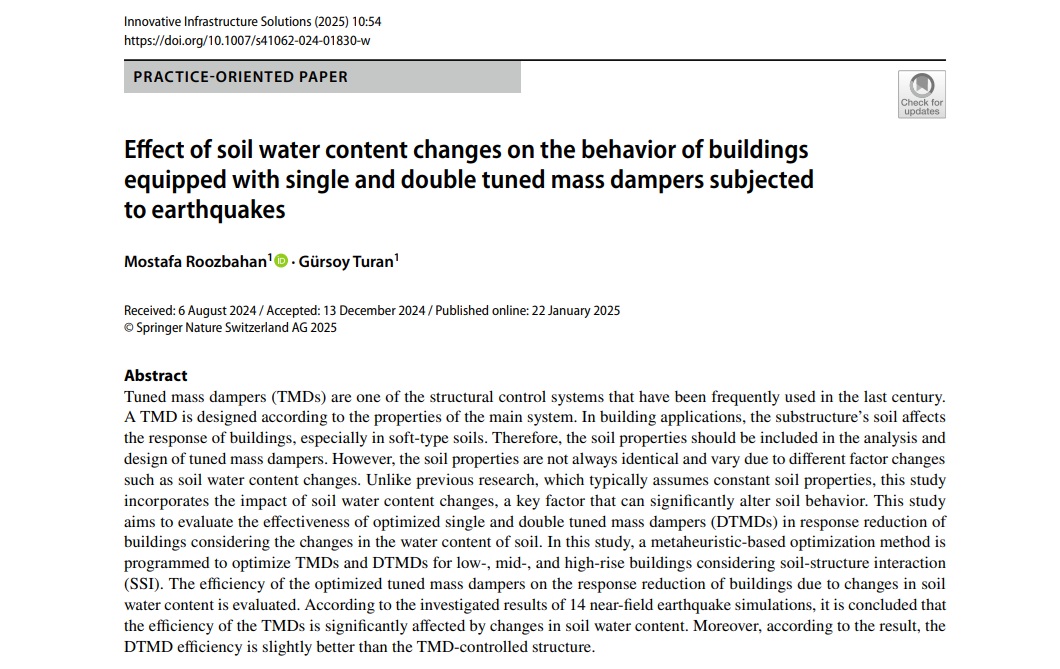
1- Roozbahan, M. and Turan, G., 2025. Effect of soil water content changes on the behavior of buildings equipped with single and double tuned mass dampers subjected to earthquakes. Innovative Infrastructure Solutions, 10(2), p.54.
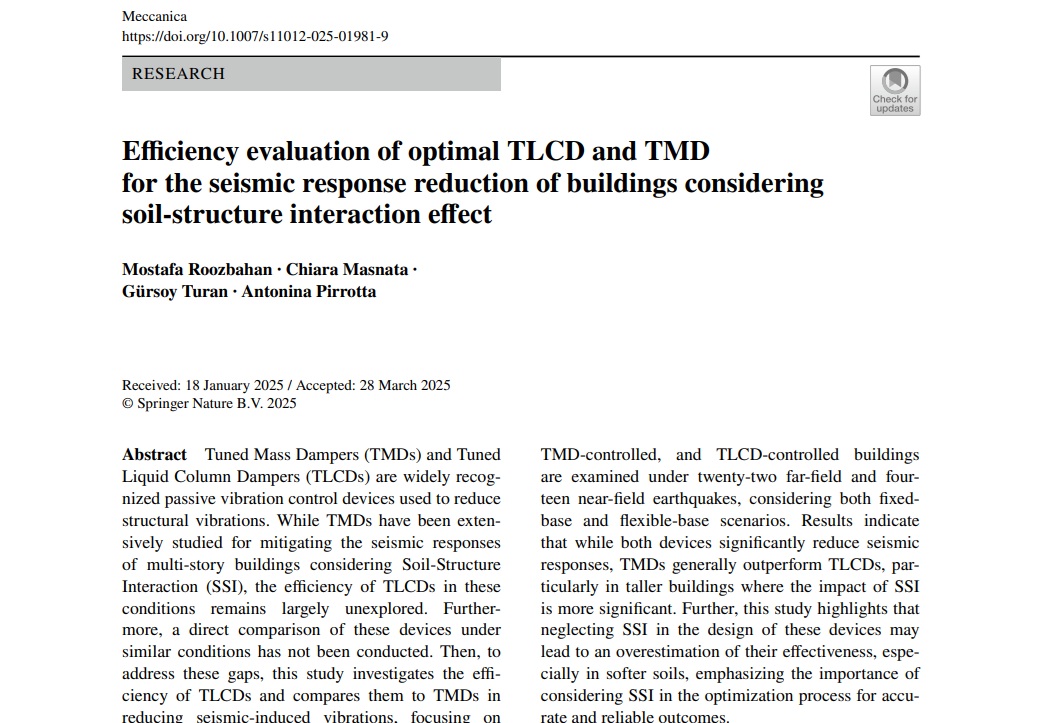
2- Roozbahan, M., Masnata, C., Turan, G. and Pirrotta, A., 2025. Efficiency evaluation of optimal TLCD and TMD for the seismic response reduction of buildings considering soil-structure interaction effect. Meccanica, pp.1-22.
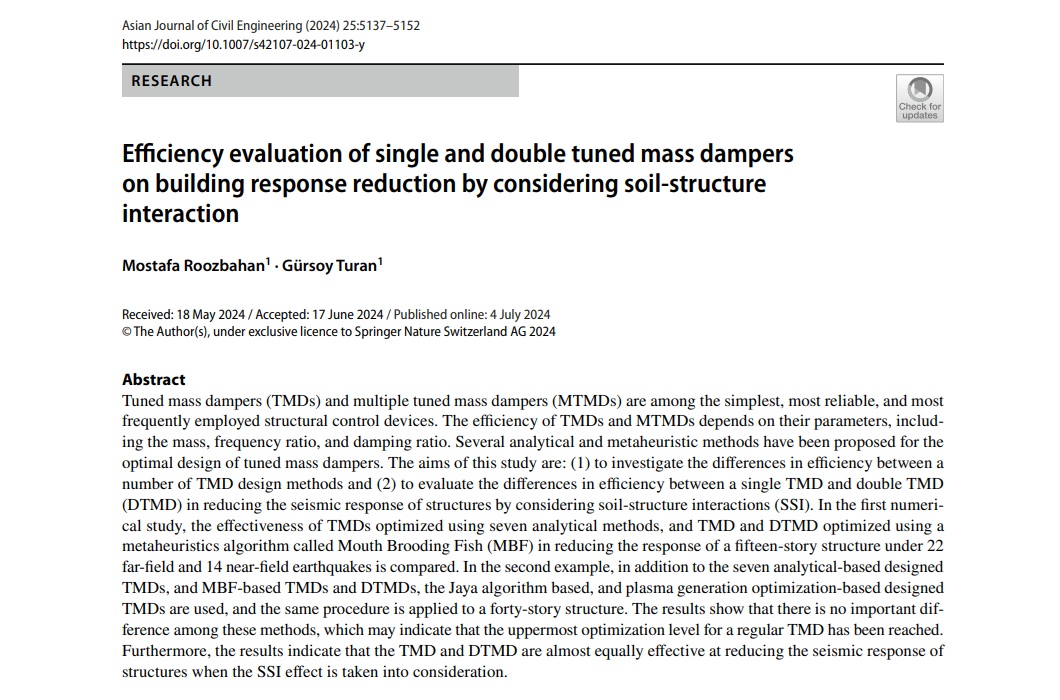
3- Roozbahan, M. and Turan, G., 2024. Efficiency evaluation of single and double tuned mass dampers on building response reduction by considering soil-structure interaction. Asian Journal of Civil Engineering, 25(7), pp.5137-5152.
“MoRo Analyzer is a fruit of the knowledge gained during my PhD and my ethical commitment to the scientific community. It aims to enhance the understanding of students, researchers, and engineers in the effect of soil-structure interaction in responses of buildings and the effect of dampers in mitigating the responses. Through demonstrating the effects of SSI and dampers, MoRo aims to inspire greater consideration of these factors in engineering practice, ultimately contributing to more resilient buildings.”

Mostafa Roozbahan, Ph.D.
Developer of MoRo Analyzer
Verification and Validation
The numerical accuracy of MoRo Analyzer has been verified through direct comparison with peer-reviewed benchmark studies published in peer-reviewed journal publications. The verification covers soil–structure interaction parameters, modal properties, and seismic response of multi-story buildings.
License Plans
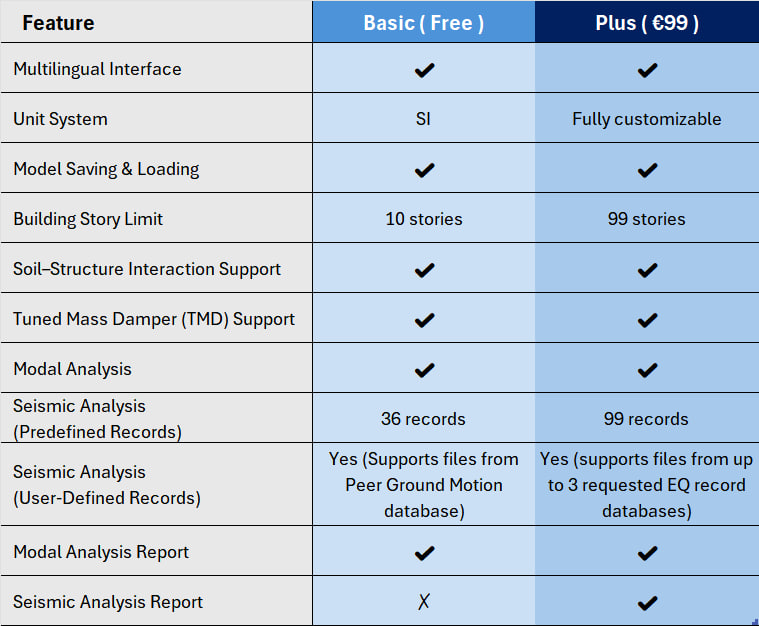
The MoRo Analyzer software is available in two license plans, designed to meet the needs of professors, students, researchers, and professional engineers.
Standard (Free) is best for education and quick studies, supporting SSI and TMD analysis with model save/load, up to 10 stories, and 36 predefined earthquake records as well as user-defined seismic records (files from the Peer Ground Motion Database), with full modal reporting.
Plus (By Request) supports up to 99 stories, a fully customizable unit system, 99 predefined records, user-defined record support upon request (up to three databases).
All licenses are perpetual (one-time fee) and include free updates for future minor releases.